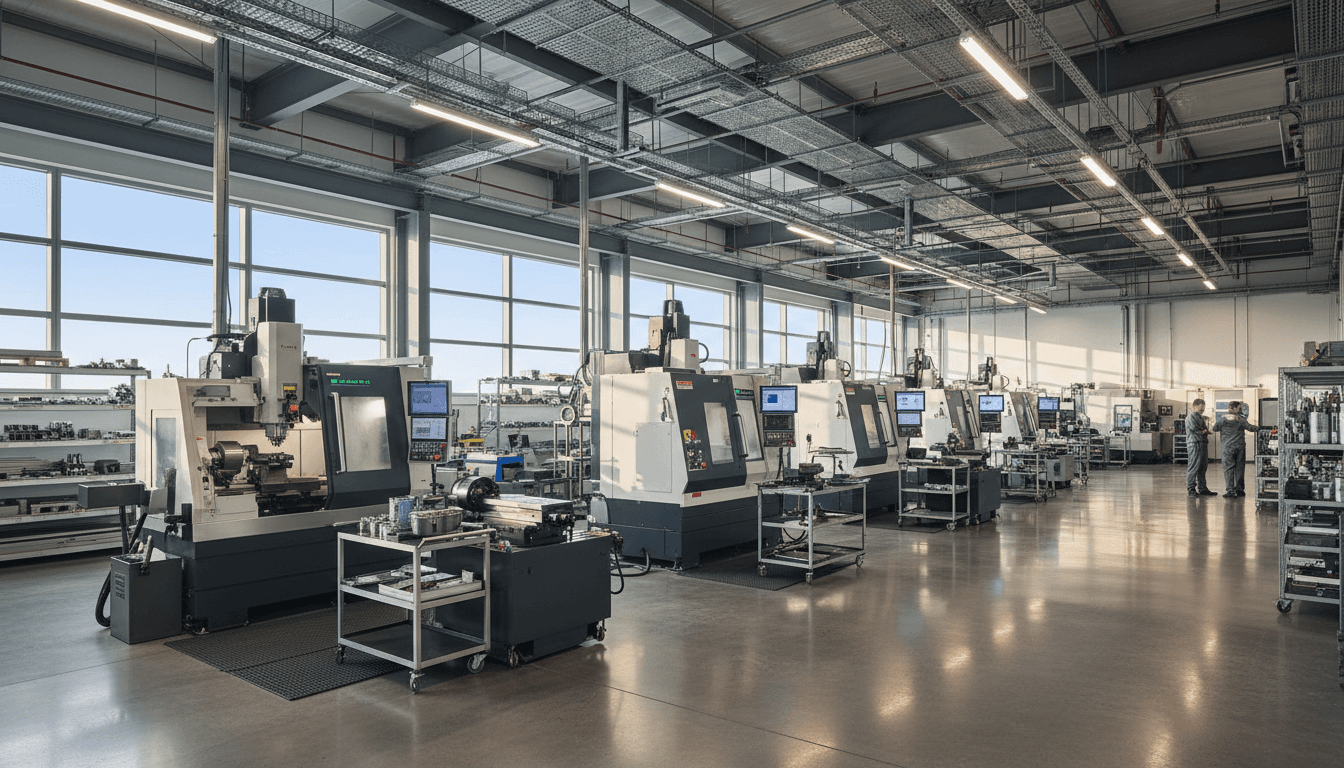
Contract manufacturing capacity planning is the strategic process of aligning production resources with market demand to ensure OEMs can scale efficiently. By leveraging the flexible infrastructure of external partners, companies can absorb demand spikes and adjust output levels without the capital risks of internal expansion. This method creates a responsive supply chain that balances production capabilities with evolving customer requirements.
Unexpected demand spikes can quickly turn a successful quarter into a logistical crisis if your production floor lacks the flexibility to adapt. For many OEMs, the struggle to balance overhead costs with the need for immediate scalability leads to missed deadlines or compromised quality. Effective contract manufacturing capacity planning is the strategic solution that bridges this gap, ensuring that your supply chain remains resilient even during rapid market shifts. It requires a sophisticated understanding of production metrics and a proactive approach to resource allocation. In this guide, we will analyze the fundamental formulas for calculating throughput, compare the strategic benefits of lead and lag capacity models, and examine how rigorous quality control protocols protect your brand during high volume runs. You will learn how to identify bottlenecks before they stall production and how precise technical blueprints facilitate seamless scaling with an expert manufacturing partner.
The Challenge of Scaling Production: Why Capacity Planning Matters for OEMs
Success often creates a paradox for Original Equipment Manufacturers (OEMs). A significant sales win or a sudden market surge can lead to a growth trap where demand far outstrips internal production capabilities. When floor space is maxed out and equipment is running at its limit, the very growth an OEM worked to achieve becomes a liability.
Navigating this challenge requires effective contract manufacturing capacity planning. This is the strategic alignment between an OEM’s demand forecast and a partner’s physical resource availability. It involves more than just signing a purchase order; it requires syncing labor, machine hours, and material procurement to ensure the production line can absorb new volume without friction.
For businesses operating in Utah and across the US, the ability to pivot and scale quickly has become a fundamental competitive necessity. Reliance on rigid, in house setups often leads to missed deadlines, quality slippage, and lost market share to more agile competitors. By utilizing specialized contract manufacturing services, OEMs can offload the burden of capital investment while maintaining the flexibility to meet demand spikes. Poor planning in this area does not just delay a single shipment; it risks the long term reputation of the brand in an increasingly fast paced market.
Understanding the Production Capacity Formula and Key Metrics
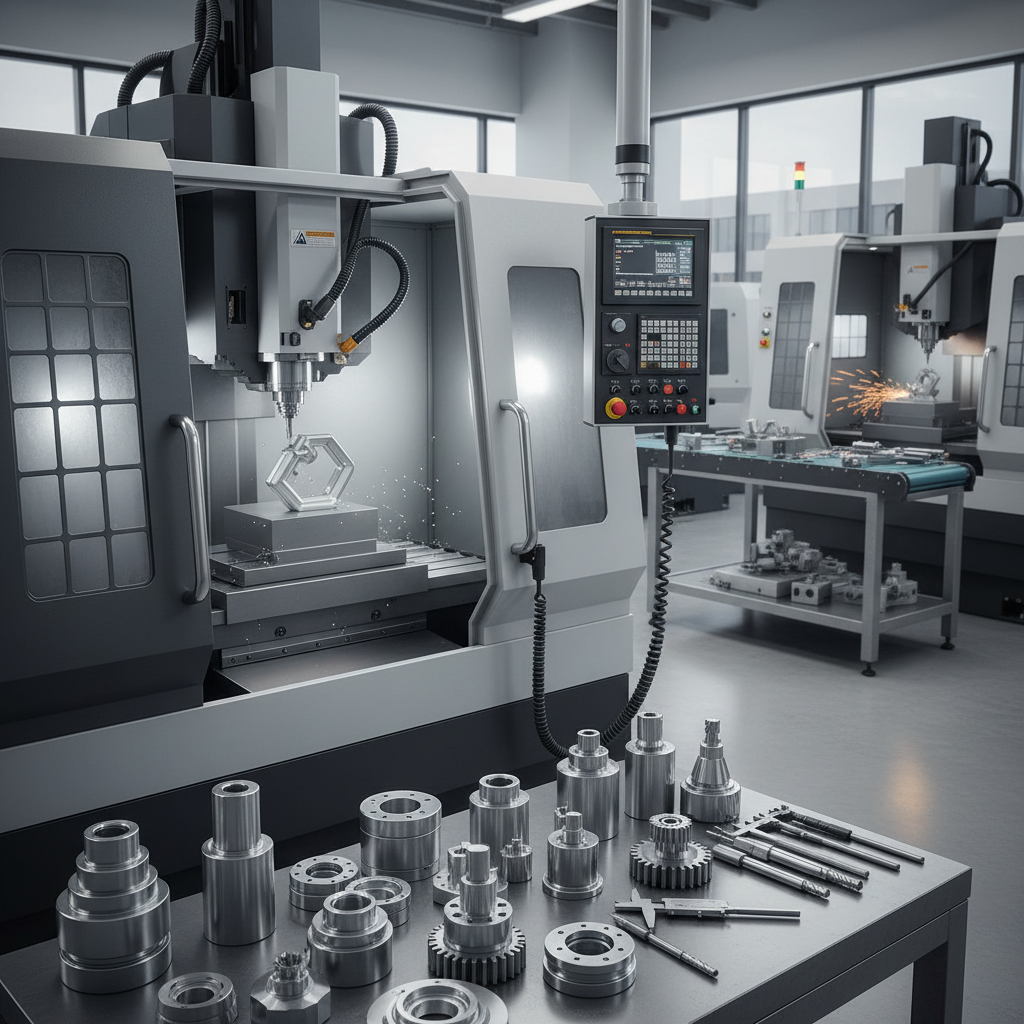
To translate a demand forecast into a production schedule, an OEM must move beyond guesswork and apply a rigorous mathematical framework. Contract manufacturing capacity planning relies on a fundamental formula to determine how much work a facility can actually handle. The standard calculation is: Machine Hours x Efficiency x Availability.
Machine Hours: The total time a piece of equipment is scheduled to run.
Efficiency: The ratio of actual output to the standard expected output; this accounts for minor interruptions or operator speed variations.
Availability: The percentage of time a machine is ready for production, excluding scheduled maintenance, tooling changeovers, or unplanned downtime.
It is vital to distinguish between theoretical capacity and effective capacity. Theoretical capacity assumes a perfect world where machines never break and material flow is never interrupted. In a practical shop environment like the one used by Duchesne Manufacturing, the focus is on effective capacity. This represents the maximum realistic output a facility can sustain indefinitely while accounting for real-world constraints.
While high production capacity utilization might seem like a goal for profitability, a 100 percent utilization rate is a significant red flag for scaling. Operating at total saturation leaves zero room for burst capacity, meaning any sudden demand spike or equipment failure results in immediate delays. For contract manufacturing services to be effective, a buffer is required to absorb the variability inherent in complex supply chains. Relying on real-time data rather than optimistic averages ensures that commitments made to OEMs are grounded in physical reality, allowing for reliable growth without the risk of system collapse.
Three Strategies for Capacity Planning: Lead, Lag, and Match
Understanding the math behind production is only the first step; applying that data requires choosing a specific strategic approach to growth. In the manufacturing sector, three primary models define how a business addresses scaling: Lead, Lag, and Match.
Lead Strategy: This is a proactive approach where capacity is added in anticipation of a demand surge. It is designed to ensure that the moment a customer places a large order, the production line is ready to execute. While this traditionally carries the risk of underutilized equipment costs, it prevents the loss of market share to faster competitors.
Lag Strategy: A reactive method where capacity is only increased after the facility has reached full utilization and demand is already present. This minimizes the risk of idle machinery but frequently results in lead-time delays, backlogs, and strained customer relationships.
Match Strategy: This involves making small, incremental adjustments to capacity to follow demand trends as closely as possible. It requires highly accurate forecasting and a very flexible production environment to be successful.
For many OEMs, the Lead strategy is the most desirable for growth but the most difficult to fund internally. Investing in new specialized machinery or expanding floor space requires significant capital that might be better spent on product development. By partnering with about Duchesne Manufacturing, an OEM can effectively execute a Lead strategy by proxy. We maintain the specialized equipment and trained labor necessary to absorb volume, allowing our clients to scale their output instantly when a contract is signed.
This shift moves the burden of capital investment from the OEM to the partner, providing the flexibility to capture demand spikes without the long term financial risk of owned assets. Utilizing professional contract manufacturing services ensures that growth is limited by market demand rather than the physical constraints of an OEM’s own facility. This strategic alignment allows for a more aggressive market stance while maintaining the stability of a lean internal operation.
How Contract Manufacturers Absorb Demand Surges Without Sacrificing Quality

Successful contract manufacturing capacity planning relies on the concept of burst capacity. This is the operational flexibility to rapidly increase output beyond normal levels to meet a temporary or unexpected surge in demand. Unlike an OEM’s internal line, which is often optimized for a static, narrow range of products, a specialized facility is engineered for volatility.
Labor management is the first lever. By maintaining a workforce cross-trained across multiple work cells, a partner can reallocate personnel to high-priority lines without the delay of new hires or specialized training. This human agility is paired with equipment versatility. Multitasking CNC machines and flexible work centers allow for varied production runs with minimal downtime for changeovers, ensuring that a sudden shift in part specifications does not stall the floor.
Effective demand absorption also requires proactive supply chain management. While an in-house team might struggle with just-in-time material shortages during a spike, a contract partner often pre-stocks long-lead materials and maintains deep relationships with secondary suppliers. This creates a buffer that prevents raw material availability from becoming a hard ceiling on growth.
Choosing a domestic partner, particularly a Utah-based facility like the one operated by about Duchesne Manufacturing, offers significant advantages over overseas options. Proximity eliminates the weeks-long transit times and customs hurdles associated with international shipping. In a rapid scaling phase, the ability to communicate in real-time and physically inspect a production run within hours provides a level of agility that distant suppliers cannot match. By utilizing professional contract manufacturing services, OEMs gain a scalable extension of their own business that remains stable even when market demand does not.
Identifying and Eliminating Bottlenecks During Production Scaling
True scaling requires a granular production capacity analysis to identify where the system will fail under pressure. Increasing machine hours is ineffective if a downstream process cannot handle the added volume. In many production environments, the bottleneck is rarely the primary fabrication step; instead, systemic friction typically occurs at choke points such as specialized finishing processes, complex assembly stages, or manual quality control stations.
This identification is a critical component of contract manufacturing capacity planning. At about Duchesne Manufacturing, we focus on identifying these constraints before they manifest as delays. If a client increases an order from 500 to 5,000 units, our team evaluates the secondary operations that often get overlooked. A specialized coating requirement or a specific raw material grade can become a hard ceiling on output if not managed proactively.
By mapping every touchpoint in the lifecycle of a part, we ensure that resources are balanced across the entire floor. We mitigate raw material shortages through strategic procurement and address QC delays by integrating inspection protocols directly into the workflow. Eliminating these bottlenecks ensures that capacity is not just theoretical but actually achievable, allowing for a seamless transition from prototype to high-volume production without the risk of mid-run stalls.
The Role of Technical Blueprints and Specifications in Rapid Scaling

Clear documentation serves as the bedrock of successful contract manufacturing capacity planning. While a small prototype run of 100 units might tolerate minor verbal clarifications or tribal knowledge on the shop floor, scaling to 10,000 units requires absolute precision. Any ambiguity in technical blueprints, such as undefined tolerance ranges or vague finishing requirements, leads to exponential errors and catastrophic scrap rates when multiplied across high volume cycles.
The transition to large scale production relies heavily on the initial Design for Manufacturability (DFM) phase. By optimizing a part for the specific equipment and workflows at about Duchesne Manufacturing, OEMs can eliminate the need for constant manual intervention or specialized workarounds. When a design is refined for repeatability, it allows contract manufacturing services to function at peak efficiency. Precise specifications ensure that every machine operator and automated system works from a single source of truth, turning a complex assembly into a predictable, scalable process that is not constrained by technical uncertainty.
Quality Control Protocols for High Volume Production

As production volume intensifies, manual inspection of every single part becomes a logistical bottleneck and a source of human error. Evolving these protocols is a critical aspect of contract manufacturing capacity planning, as it shifts the focus from reactive defect detection to proactive process stability. Transitioning to Statistical Process Control (SPC) allows for real-time monitoring of production variables, ensuring that small deviations are corrected before they result in significant scrap.
At about Duchesne Manufacturing, we utilize a tiered inspection approach. While calipers and precision thread gauges provide immediate feedback on the floor, high-volume consistency is achieved through CNC-integrated probing and automated gauging. These systems measure critical dimensions mid-cycle, automatically adjusting machine offsets to compensate for thermal expansion or tool wear. By leveraging these contract manufacturing services, we guarantee that the 5,000th unit in a run maintains the exact tolerances of the initial prototype. This technical rigor prevents quality slippage, providing the reliability needed for sustainable long-term scaling.
Effective capacity planning is the cornerstone of sustainable growth; it ensures your production remains agile enough to handle unexpected demand shifts. By integrating these strategies into your operations, you can maintain quality while scaling efficiently. If you want expert help streamlining your manufacturing processes or managing complex supply chain requirements, feel free to read more about our team and the tailored solutions we provide to help OEMs achieve their primary production goals.