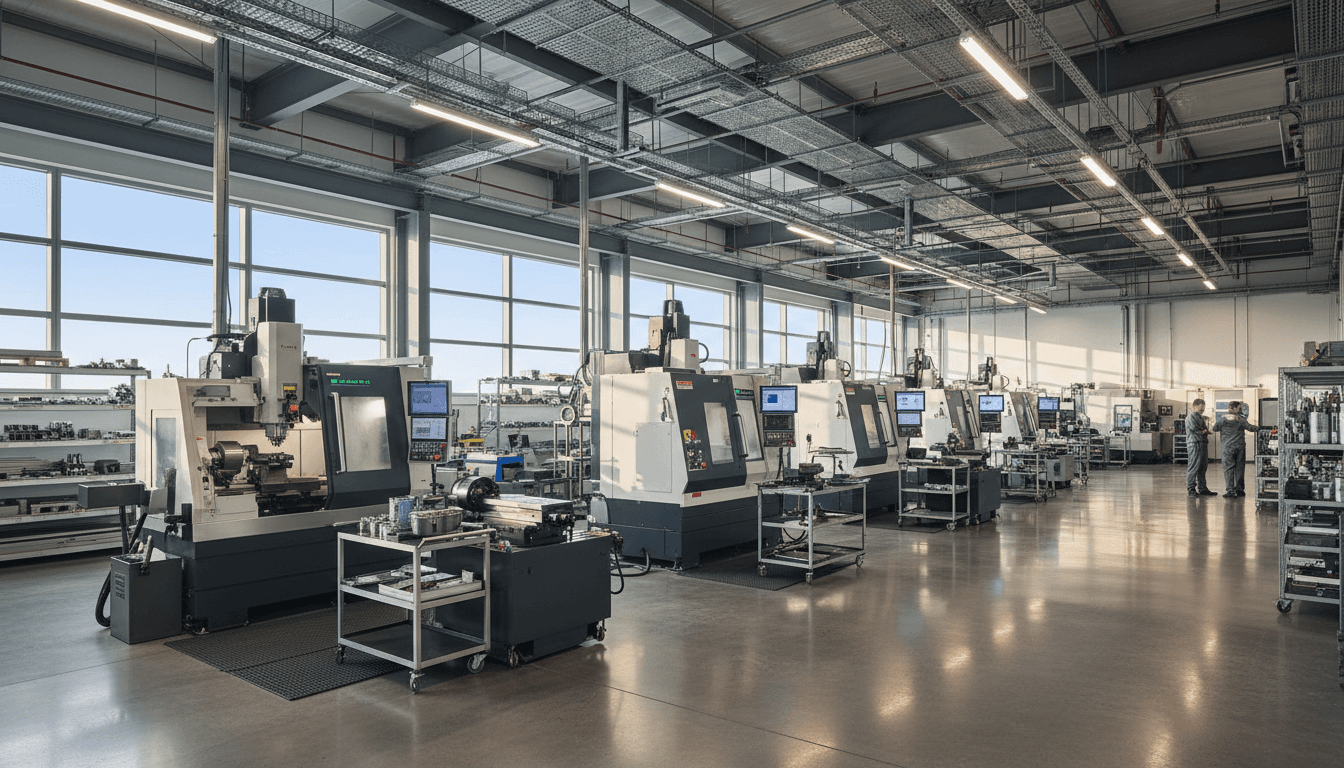
The total contract manufacturing cost is determined by a combination of direct labor, raw materials, and factory overhead, plus specialized fees for quality control and regulatory compliance. Pricing is typically structured through fixed-price or cost-plus models that also incorporate non-recurring engineering expenses and tooling requirements. OEMs must evaluate these components alongside volume requirements to establish a predictable budget for their production projects.
For many Original Equipment Manufacturers, the transition from a final design to a full production run is often marred by financial ambiguity. You receive a quote that seems manageable, yet by the time the product hits the shipping dock, unforeseen expenses have eroded your projected margins. This lack of transparency is more than a minor frustration; it is a fundamental risk to your operational scalability. Understanding the true drivers of contract manufacturing cost is essential for maintaining a competitive edge. In this guide, we move beyond simple labor and material estimates to explore the impact of non-recurring engineering fees, tooling investments, and various pricing models. We will also identify the hidden logistical and quality-control costs that often inflate the bottom line, providing you with the framework necessary to calculate a realistic cost per unit.
Understanding the Foundation of Contract Manufacturing Cost
The true contract manufacturing cost is rarely reflected in the initial unit price quote alone. It represents a comprehensive sum of every resource consumed during the production lifecycle, from raw material procurement to final delivery. While many Original Equipment Manufacturers (OEMs) focus exclusively on the per-unit fee, the actual financial commitment involves a complex interplay of direct manufacturing expenses and indirect operational overhead. To gain an accurate picture, businesses must adopt the concept of Total Cost of Ownership (TCO).
As a manufacturer based in Duchesne, UT, we see firsthand how OEMs often underestimate the impact of logistics, quality systems, and communication overhead. These soft costs, including regulatory compliance and inventory management, can significantly alter the profitability of a product line. A low unit price from a distant vendor frequently masks high hidden costs related to shipping delays or management friction. By understanding that the foundation of cost includes these broader variables, you can better evaluate how a domestic partner might offer a lower TCO despite a different sticker price. Before you commit to a production run, it is wise to contact Duchesne Manufacturing to discuss how these variables apply to your specific project specifications and contract manufacturing services needs.
The Three Primary Categories of Manufacturing Costs

To effectively manage your contract manufacturing cost, you must first isolate the three basic manufacturing cost categories that drive every quote. These pillars; Direct Materials, Direct Labor, and Manufacturing Overhead, provide the framework for understanding where your capital is being allocated on the shop floor.
Direct Materials: This category includes all physical raw goods and sub-components that become a permanent part of the finished product. For a typical fabrication project, this encompasses raw steel, fasteners, and specialized coatings. At Duchesne Manufacturing, we evaluate material yields and scrap rates to ensure that the quoted material cost accurately reflects actual consumption during the production process.
Direct Labor: This represents the wages and benefits paid to the technicians and operators physically working on the product. It is calculated by multiplying the hourly labor rate by the time required to complete the assembly or machining process. Efficiency in this category is highly dependent on the skill level of the workforce and the sophistication of the equipment being utilized.
3. Manufacturing Overhead: This is often the most misunderstood component. Overhead encompasses the indirect costs required to keep the facility operational. It is further divided into two types: - Fixed Overhead: Costs that remain constant regardless of production volume, such as facility maintenance, equipment depreciation, and insurance. - Variable Overhead: Costs that fluctuate based on activity levels, including utility consumption for heavy machinery and indirect shop supplies like lubricants or welding gas.
Understanding how overhead is applied is critical for accurate budgeting. For example, if a facility operates with an overhead rate of $50 per hour and your specific part requires 1.5 hours of machine time, you are incurring $75 in overhead alone before a single dollar is spent on materials or labor. For complex projects, these contract manufacturing services require precise time tracking to prevent overhead bleed. If you are unsure how these rates apply to your current production run, you can contact Duchesne Manufacturing for a detailed assessment of your project's cost structure.
NRE and Tooling: The Non-Recurring Engineering Factor

Moving beyond the recurring hourly rates, we must address the specialized investments required to initiate a production run. Non-Recurring Engineering (NRE) and tooling represent the front-end expenses necessary to transition a design into a physical reality. NRE covers the intellectual and technical labor, such as CNC programming, workflow engineering, and the design of custom work-holding fixtures. Tooling refers to the physical hardware, including molds, dies, or specialized cutting tools, that are specific to your part and cannot be easily repurposed for other projects.
In complex projects involving injection molding or die casting, custom tooling alone often accounts for 20 to 30 percent of the total project budget. These are typically one-time setup fees; however, their impact on your initial capital outlay is substantial. Because these costs are non-recurring, they should not be viewed as a permanent increase to the unit price. Instead, successful OEMs amortize these costs over the total projected production volume to understand the long-term impact on their contract manufacturing cost.
For example, if you invest $15,000 in a specialized die for a production run of 5,000 units, the NRE adds $3 to the cost of every part. If the product scales to 50,000 units, that burden drops to $0.30 per unit. Understanding the lifespan and scalability of your tooling is vital when evaluating your project. To ensure your fixture designs and programming are optimized for long-term efficiency, you can contact Duchesne Manufacturing for a technical review. Our contract manufacturing services include a thorough analysis of how these upfront investments will translate into per-unit savings over the life of your product.
How to Calculate Contract Manufacturing Cost Per Unit
To move from theoretical estimates to a firm budget, you must utilize a standardized calculation that accounts for every expense, including the amortized front-end investments. The most reliable way to determine your contract manufacturing cost per unit is to follow this formula:
(Total Materials + Total Labor + Total Overhead + [Total NRE / Total Units]) / Number of Units
Applying this formula to a practical production scenario illustrates the impact of each variable. Consider an order for 1,000 units with the following cost breakdown:
Direct Materials: $5,000
Direct Labor and Overhead: $5,000
NRE and Tooling Fees: $10,000
First, you combine the recurring production costs (materials, labor, and overhead), which total $10,000. Next, you determine the NRE burden by dividing the one-time $10,000 fee by the 1,000 units, resulting in $10 per unit. By adding the $10 recurring cost to the $10 NRE burden, the total cost per unit is $20.
This calculation highlights why volume and Minimum Order Quantities (MOQs) are the primary drivers for scaling. In the example above, the NRE accounts for 50 percent of the total unit cost. If the production volume increased to 10,000 units, the NRE burden would drop to just $1 per unit, bringing the total price down to $11. This math is fundamental to long-term profitability and competitive pricing. At Duchesne Manufacturing, we assist OEMs in analyzing these variables to ensure their production runs are optimized for the best possible return on investment. If you are currently projecting a new product line, you can contact Duchesne Manufacturing to review how our contract manufacturing services can help you reach these economies of scale.
Pricing Models: Fixed Price vs. Cost-Plus Pricing
Once you understand the math behind your contract manufacturing cost, you must decide which pricing structure best aligns with your risk tolerance and project complexity. Most agreements fall into one of two categories: Fixed Price or Cost-Plus Pricing. Each model handles the inherent risks of the shop floor differently.
In a Fixed Price model, the manufacturer provides a locked-in unit price for the duration of the contract. This offers the highest level of budget predictability for the OEM, as the manufacturer assumes all risk regarding labor inefficiencies, equipment downtime, or minor material fluctuations. However, because the manufacturer is taking on that risk, the quote often includes a premium to buffer against unforeseen expenses. This model is generally most effective for standardized parts with proven production histories where variables are minimal and processes are mature.
Feature | Fixed Price Model | Cost-Plus Pricing |
|---|---|---|
Risk Allocation | Manufacturer bears production risk | OEM bears cost fluctuation risk |
Price Predictability | High; price is locked per contract | Variable; depends on actual inputs |
Transparency | Low; internal cost structures are private | High; usually involves open-book accounting |
Ideal Application | Repeatable, high-volume production | Complex, custom, or R&D-heavy projects |
Cost-Plus Pricing operates on an open-book basis, where the OEM pays the actual direct and indirect costs incurred during production plus a pre-agreed management fee or percentage markup. This provides total transparency into where every dollar is spent, but it requires the OEM to carry the burden of material price spikes or production delays. This structure is often superior for complex, highly custom projects where the scope may evolve during the initial runs. By utilizing these contract manufacturing services under a cost-plus arrangement, both parties can iterate on the manufacturing process without the friction of constant re-quoting. If you need assistance determining which model suits your current production lifecycle, you can contact Duchesne Manufacturing for a detailed consultation on risk management and transparency.
Hidden Costs that Inflate the OEM Bottom Line

A low per-unit quote often acts as a financial trap if it ignores the expenses that materialize after the contract is signed. Quality control failures are among the most damaging hidden costs. When a vendor lacks rigorous inspection protocols, the OEM bears the financial burden of rework, scrap, and the administrative labor of processing returns. These disruptions can effectively double the projected contract manufacturing cost for a specific production run, as the price of a defective part includes the original cost plus the logistics of its replacement.
Logistics and transit times represent another significant drain on capital. Selecting a domestic partner like Duchesne Manufacturing eliminates the volatility of international freight, port congestion, and customs tariffs. Overseas shipping delays do more than just stall production; they increase inventory carrying costs by forcing you to maintain larger safety stocks to hedge against supply chain instability. Working with a US based facility allows for leaner inventory levels and faster response times to market shifts.
Management overhead is the final invisible expense. Operating across vastly different time zones requires significant internal staff time for oversight and correction. A cheaper remote vendor loses its edge when you account for the hours spent managing communication friction and correcting misunderstandings. To minimize these variables and stabilize your budget, you can contact Duchesne Manufacturing to discuss how our localized contract manufacturing services streamline your supply chain and protect your bottom line.
Negotiating Minimum Order Quantity and Production Terms
Minimum Order Quantities (MOQs) are often perceived as a barrier, yet they are a functional necessity in maintaining a stable contract manufacturing cost. A manufacturer requires a minimum volume to absorb the non-productive time associated with machine calibration, tool changes, and the inevitable material waste that occurs during the initial setup of a production line. Without these minimums, the setup labor and material scrap would consume the entire profit margin of a short run, making the project unsustainable for the shop.
OEMs can negotiate these terms effectively by proposing blanket orders or staggered delivery schedules. A blanket purchase order allows you to commit to a larger annual volume, which secures a lower per-unit rate, while the manufacturer releases the inventory in smaller batches over several months. This strategy provides the manufacturer with production predictability while helping the OEM manage cash flow and reduce the inventory risk of a single massive shipment.
Finding the sweet spot between high-volume discounts and warehousing expenses is essential. While a higher MOQ significantly reduces the unit price, it also increases carrying costs and ties up working capital in stagnant stock. For those looking to optimize their production schedules, you can contact Duchesne Manufacturing to discuss flexible production terms. Our contract manufacturing services are designed to align with your specific inventory turnover goals, ensuring that your production runs remain both cost-effective and responsive to actual market demand.
Understanding the true costs of contract manufacturing requires looking beyond simple piece prices to see the full picture of overhead, quality control, and logistics. While managing these details internally is possible, finding the right partner can simplify your supply chain and provide valuable clarity for your budget. If you are looking for expert guidance to navigate these complexities, you can learn more about Duchesne Manufacturing and how we prioritize transparency. We are here to help you optimize your operations whenever you are ready to take the next step.