Improving on-time in-full delivery contract manufacturing requires the seamless integration of inventory management, production planning, and rigorous quality control protocols. OEMs can optimize their performance by leveraging real time data to coordinate procurement and logistics; this ensures that all components are delivered complete and according to the agreed schedule.
A single missing component or a shipment arriving two days late can grind an entire production line to a halt, creating a ripple effect that costs your organization time and capital. For OEMs, navigating the complexities of modern supply chains requires more than just a vendor; it demands a partner committed to absolute precision. On-Time In-Full (OTIF) delivery is the ultimate benchmark of this reliability, yet many manufacturers struggle to move beyond basic on-time metrics. In this guide, we will explore the critical distinction between OTD and OTIF, provide a framework for calculating these metrics accurately, and outline three core strategies to safeguard your production schedule. From leveraging value added services to conducting rigorous root cause analysis, you will learn how to hold your contract manufacturing partner to the highest standards of operational excellence.
The Critical Role of OTIF in Modern Supply Chains
In modern supply chain management, traditional On-Time Delivery (OTD) metrics are no longer sufficient to ensure operational success. While OTD tracks if a shipment arrived by the deadline, it ignores the quantity. On-Time In-Full (OTIF) delivery has emerged as the gold standard because it measures both timing and completeness. For an OEM, a shipment that is on time but missing 20% of the precision components is effectively a failure, as partial shipments cannot be fully assembled.
This discrepancy often triggers the bullwhip effect. A minor shortfall from a contract manufacturer creates exponential disruptions downstream, leading to idle assembly lines, late shipments to end customers, and costly administrative overhead to track missing parts. At Duchesne Manufacturing, we recognize that on-time in-full delivery contract manufacturing is not just a KPI; it is the absolute foundation of production continuity.
When a partner fails to deliver in full, the OEM's internal contract manufacturing capacity planning is compromised. Relying on US contract manufacturing services that prioritize OTIF allows companies to maintain leaner inventories and avoid the production buffer erosion that occurs when suppliers consistently miss the mark. For critical components, OTIF is the only metric that truly reflects a supplier's impact on your bottom line.
Understanding the Metrics: OTD vs. OTIF

To understand why delivery failures persist despite seemingly positive reports, OEMs must distinguish between chronometric success and volume success. On-Time Delivery (OTD) is a binary measurement of time. It records whether a shipment arrived by the agreed-upon date; however, it fails to account for quantity variances, which is where the risk of line stoppages often hides.
On-Time In-Full (OTIF) is a more rigorous standard because it requires both chronological accuracy and order completeness. Consider a scenario where an OEM orders 1,000 precision machined parts for a Tuesday morning delivery. If the manufacturer delivers 800 parts on Tuesday, a traditional OTD report marks this as a 100% success because a shipment arrived on the requested date. Under the stricter lens of OTIF, this delivery is a 0% success. The order was not fulfilled in its entirety, meaning the production cycle cannot be completed as scheduled.
This discrepancy is dangerous for supply chain managers. A reporting system that prioritizes OTD might show a green status for a supplier even as the assembly line sits idle waiting for the remaining 200 components. Shortfalls often occur during final stages such as inspection or packaging, where yields might drop unexpectedly. By focusing on reducing costs through smart engineering and rigorous production controls, manufacturers can ensure that the quantity shipped matches the quantity ordered every time. Without the "In-Full" component, a metric provides a false sense of security while actively eroding the production buffer needed to keep downstream operations moving.
How to Calculate On-Time In-Full Delivery for Your Manufacturer
Calculating OTIF requires a disciplined approach to data collection that accounts for every line item in a purchase order. The formula is mathematically simple but operationally demanding:
OTIF (%) = (Number of orders delivered on time and in full / Total number of orders) x 100
To be considered "in full," every single unit specified in the contract must be present and pass quality inspection. If an OEM places 50 orders in a month and two shipments are late while three others are missing even a handful of parts, the score drops to 90%. This reflects five failed opportunities to maintain the production schedule, regardless of how many individual parts were eventually delivered.
Understanding what constitutes a "good" score is vital for supply chain health. In general manufacturing, a score falling below 85% is a significant red flag; this typically indicates systemic issues in contract manufacturing capacity planning or shop floor management. However, for top-tier critical suppliers providing essential components, the benchmark is much higher. OEMs should expect a score of 95% or greater. Anything lower than this threshold begins to erode the production buffer, forcing the OEM to carry excess safety stock to compensate for supplier unreliability. High performance in on-time in-full delivery contract manufacturing ensures that lean manufacturing principles remain viable rather than becoming a costly operational liability.
Three Core Strategies for OEMs to Ensure Delivery Reliability
Transitioning from simply measuring performance to actively managing it requires a shift in how OEMs interact with their production partners. High OTIF scores are rarely the result of luck; they are the outcome of structured communication and realistic planning. To move the needle toward that 95% benchmark, OEMs should focus on three specific operational strategies.
First, implement a formal supplier scorecard. Moving beyond verbal updates or anecdotal check-ins is essential for long term reliability. A scorecard should be a data-driven dashboard that tracks the OTIF percentage of every purchase order, not just a cumulative average. By documenting every instance where a shipment was either late or incomplete, both parties can identify patterns. If failures consistently occur during the final week of a month, it may indicate a bottleneck in the manufacturer's inspection or shipping department. This level of granular data allows for objective performance reviews and targeted improvements in US contract manufacturing services.
Second, establish mutually agreed-upon lead time windows that account for raw material procurement. Many delivery failures stem from a misunderstanding of 'contract turnaround time.' An OEM might assume the clock starts at the production phase, while the manufacturer is still waiting three weeks for specialized stock. OEMs must work with their partners to define a window that includes a realistic buffer for sourcing materials. When these buffers are integrated into the contract manufacturing capacity planning phase, it eliminates the pressure to rush production, which often leads to quality rejects and incomplete shipments.
Third, prioritize demand forecasting transparency. The most significant barrier to on-time in-full delivery contract manufacturing is a reactive production environment. When an OEM shares a rolling six-month or twelve-month forecast rather than relying on isolated, one-off purchase orders, it allows the manufacturer to pre-stage labor and machine time. This visibility enables the shop to secure materials in advance and optimize workflow efficiency, ensuring that when the formal PO arrives, the infrastructure to fulfill it in full is already in place.
The Impact of Value Added Services on Delivery Speed
Delivery speed often stalls not during the primary machining or fabrication phase, but during the secondary operations that follow. Many shops outsource essential processes like deburring, precision cleaning, and specialized inspection to third-party vendors. These hand-offs introduce significant variables outside the manufacturer's direct control, often leading to a cascade of delays that ruin an otherwise perfect production schedule. By integrating these value added services in-house, a contract manufacturer eliminates the administrative and logistical friction of moving parts between facilities.
At our facility in Duchesne, UT, managing these final steps under one roof ensures that quality checks and finishing do not become the bottleneck that tanks an OTIF score. This integrated approach is a core component of effective contract manufacturing capacity planning. Furthermore, localized production in Utah provides a geographical safeguard against the shipping volatility inherent in overseas freight.
While international sourcing may seem cost-effective initially, the risk of port congestion and transit delays makes on-time in-full delivery contract manufacturing nearly impossible to guarantee. Choosing US contract manufacturing services ensures that finished products move directly from the inspection bench to the loading dock without crossing oceans. This proximity provides a predictable lead time that overseas competitors cannot match, allowing OEMs to keep their assembly lines running without the need for excessive safety stock.
Root Cause Analysis: Why OTIF Scores Drop

When OTIF scores begin to slide, the failure usually stems from three operational gaps: inventory inaccuracies, labor constraints, or mismanaged capacity. Poor inventory management is often the quietest killer of a manufacturer's reputation. If a shop’s digital records do not match the physical shelf, a production run might reach the 95% completion mark only to halt because a critical fastener or component is missing. This results in the "In-Full" portion of the metric failing, even if the majority of the order is ready to ship.
Labor shortages and poor contract manufacturing capacity planning also create significant delivery risks. A shop running at 100% capacity has no room for error; one machine breakdown or employee absence ripples through every pending order. During a facility audit, OEMs should look beyond the machinery and evaluate production workflow efficiency. Ask the partner how they track real time progress of a part through the shop floor. Specifically, inquire about their internal triggers for escalating delays in inspection and packaging, as these final stages are where labor shortages often manifest most acutely, adding days to the schedule after the actual fabrication is done.
To verify if a provider can truly sustain on-time in-full delivery contract manufacturing, OEMs must ask specific questions: "How do you account for machine downtime in your lead time estimates?" and "What is your process for reconciling physical inventory against your ERP system?" A partner who cannot answer these with data is likely managing by intuition rather than engineering, a practice that inevitably leads to production buffer erosion. Identifying these systemic risks early ensures that US contract manufacturing services remain a strategic asset rather than a source of supply chain volatility.
How Duchesne Manufacturing Protects Your Production Schedule
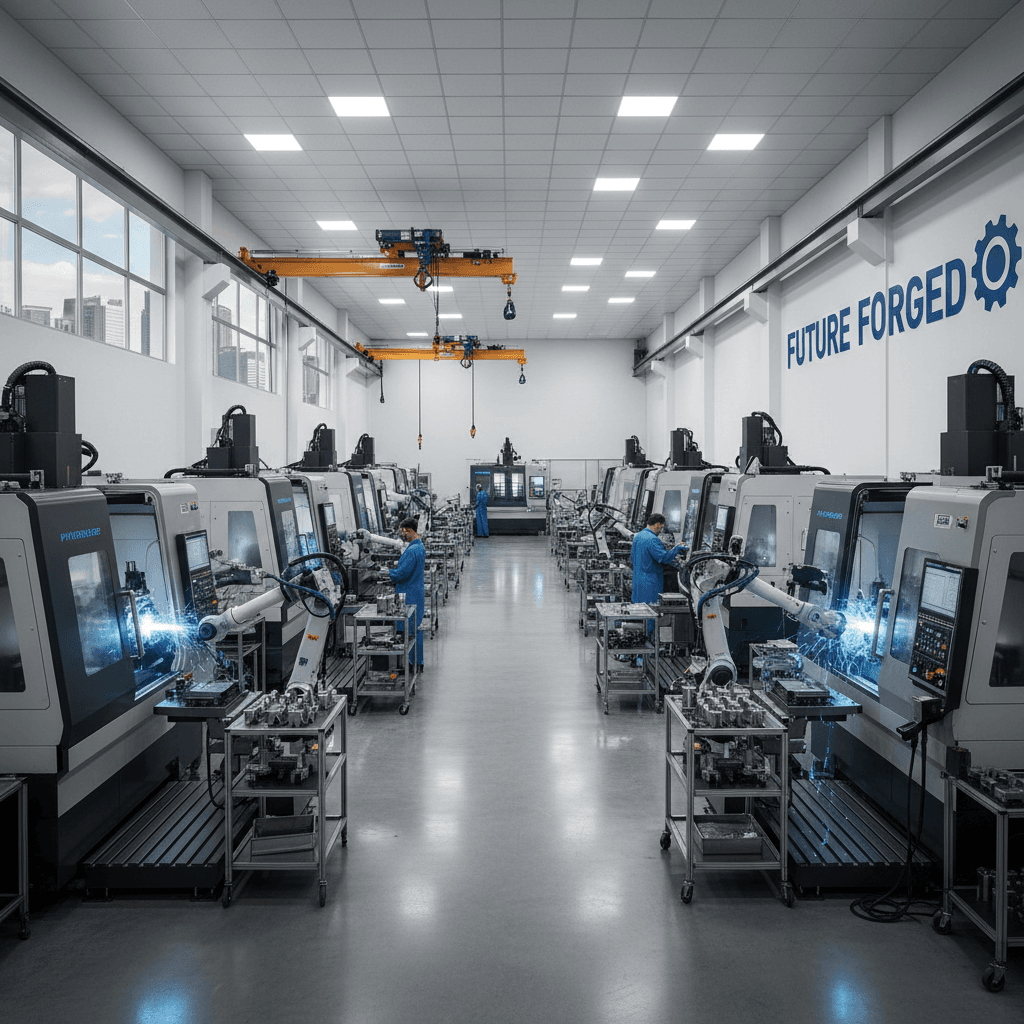
Our approach to maintaining high OTIF scores centers on a highly organized facility floor where every project has a defined path. By utilizing dedicated workstations for specific production phases, we eliminate the bottlenecks that typically occur when parts are left waiting for the next process. This structure facilitates clear visibility, ensuring that every unit in a purchase order is accounted for before it moves to the final inspection and packaging stages. These controls directly address the inventory and labor risks that often cause shipments to arrive incomplete.
Operating out of Duchesne, UT, provides a distinct lead time advantage over international alternatives. While overseas sourcing is prone to shipping delays and customs disruptions, our US contract manufacturing services offer a direct logistics path to your facility. This proximity, paired with rigorous contract manufacturing capacity planning, ensures that we meet the strict requirements of on-time in-full delivery contract manufacturing. By keeping production local and organized, we provide the stability OEMs need to keep their assembly lines moving without the burden of excess safety stock.
Mastering on-time in-full delivery is essential for maintaining a competitive edge and ensuring seamless production workflows. While the strategies outlined here provide a strong foundation, managing global supply chains and manufacturing timelines often requires specialized oversight. If you want expert help refining your delivery metrics or scaling your operations, a collaborative partnership might be the right solution. You can read more about our commitment to excellence to understand how we prioritize your deadlines. We focus on delivering results that keep your business moving forward without unnecessary delays.