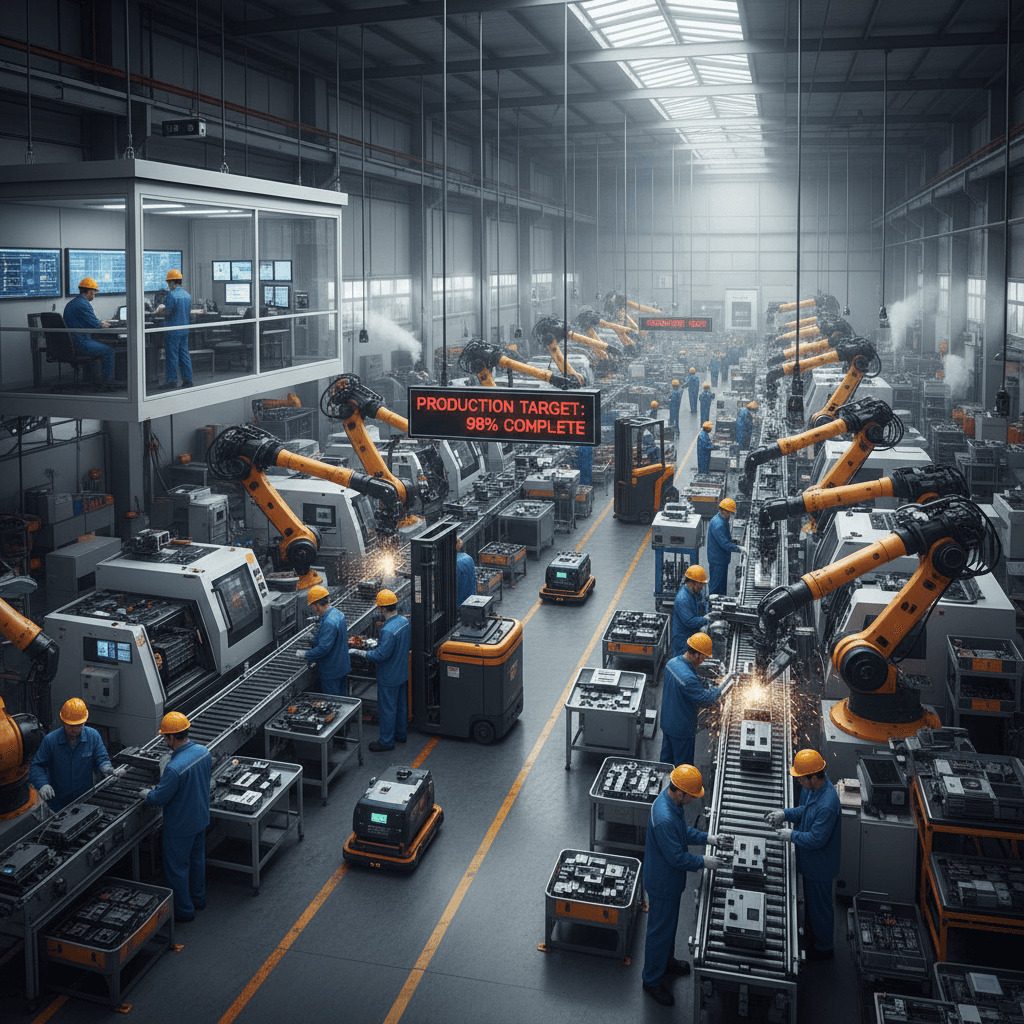
Original equipment manufacturers are prioritizing US contract manufacturing reshoring to mitigate supply chain disruptions, reduce geopolitical risks, and improve operational agility. This strategic shift is driven by a need for resilient domestic production and the adoption of advanced smart technologies; these factors have already added hundreds of thousands of jobs to the American economy.
For years, original equipment manufacturers relied on overseas labor to pad margins; however, the hidden costs of broken supply chains and volatile shipping lanes have finally eroded those gains. You likely face the constant frustration of months-long lead times and quality issues that are impossible to resolve from across an ocean. This shift is why domestic production is no longer just a patriotic sentiment; it is a strategic necessity for maintaining operational resilience and protecting your bottom line. Bringing manufacturing back to U.S. soil offers more than just proximity. It provides a level of oversight and speed that global competitors simply cannot match. In this guide, we will analyze the total landed cost equation, explore how reshoring secures your intellectual property, and demonstrate why agile facilities like Duchesne Manufacturing are the key to navigating today’s unpredictable market.
The Current State of US Contract Manufacturing Reshoring
Reshoring is the strategic practice of bringing manufacturing operations and supply chains back to the United States from overseas locations. While the concept has been discussed for years, it has recently moved from a peripheral consideration to a core component of American industrial policy. The scale of this transition is substantiated by hard data. The Reshoring Initiative’s 2024 report detailed that 244,000 manufacturing jobs were announced as returning to the US, marking one of the strongest years on record for domestic production growth.
This momentum is expected to accelerate significantly through 2025 and 2026. US contract manufacturing reshoring is being driven by a fundamental need for supply chain resilience in an era of heightened trade policy uncertainty. For most Original Equipment Manufacturers (OEMs), the goal is no longer just finding the lowest possible unit price; it is ensuring that production remains uninterrupted by geopolitical shifts or global logistics failures. The previous reliance on distant, low-cost labor markets is being replaced by a preference for proximity and stability.
Today, domestic production is a dominant corporate strategy for OEMs across numerous sectors. Companies are looking for stable partners capable of delivering specialized contract manufacturing services that meet rigorous technical specifications without the lead times associated with transoceanic shipping. By learning more about Duchesne Manufacturing, OEMs can see how local facilities are scaling to meet this demand, providing the infrastructure and labor necessary to support a renewed American manufacturing base. This shift represents a permanent change in how high-scale components and finished products are brought to market.
Mitigating Supply Chain Risks and Global Volatility
The transition toward US contract manufacturing reshoring is largely a defensive maneuver against a global logistics landscape that has become increasingly unpredictable. Since 2020, the industry has faced a series of "black swan" events, including pandemic lockdowns, canal blockages, and geopolitical conflicts, that have exposed the fragility of lean, offshore supply chains. For an OEM, a single delay at a foreign port or a labor strike at a major terminal can halt production for weeks, leading to missed deadlines and lost revenue.
Relying on international shipping involves navigating volatile freight costs and long transit times that are sensitive to regional instability. In contrast, domestic production offers a controlled environment where logistics are managed via trucking and rail within the North American continent. Utilizing contract manufacturing services in a stable, inland location like Duchesne, Utah, provides a strategic buffer. Utah's infrastructure and geographic position minimize exposure to the coastal bottlenecks and international tensions that frequently disrupt overseas shipments.
By shortening the distance between the shop floor and the final assembly point, companies can eliminate thousands of miles of risk. This proximity ensures that production schedules remain tied to actual demand rather than the whims of global shipping lanes. For those looking to learn more about Duchesne Manufacturing, it becomes clear that localizing production is about more than just convenience; it is a fundamental risk-mitigation strategy.
The Total Landed Cost Equation: Why Reshoring Often Beats Offshoring
A common misconception in procurement is that a lower per-unit quote from an overseas supplier translates directly to a healthier bottom line. This focus on the "ex-works" price ignores the Total Landed Cost (TLC), which represents the true expense of getting a product into a warehouse and ready for use. For many Original Equipment Manufacturers (OEMs), the math behind US contract manufacturing reshoring is becoming more favorable as the hidden costs of offshoring continue to rise.
Total Landed Cost encompasses far more than the base manufacturing fee. It includes international freight, insurance, and ever-shifting tariffs that can fluctuate overnight. Furthermore, the inventory carrying cost of goods in transit is a significant burden; capital is effectively locked up for weeks or months while products sit on ocean vessels. When evaluating local contract manufacturing services, OEMs must account for these factors:
Cost Factor | Impact of Offshoring | Impact of Domestic Reshoring |
|---|---|---|
Lead Time | 6 to 12 weeks average | 1 to 2 weeks average |
Inventory | High safety stock required | Just-in-time possible |
Tariffs/Duties | Significant and unpredictable | Zero or minimal |
Quality Oversight | Costly and reactive | Real-time and proactive |
Precision components and high-mix, low-volume production cycles are particularly sensitive to the TLC equation. If a batch of complex parts arrives from a foreign facility with a 4% defect rate, the cost of sorting, scrapping, and re-ordering those parts can erase a year’s worth of labor savings. Domestic shops provide a tight feedback loop that prevents these quality failures from cascading.
Technological advancements are also narrowing the traditional labor price gap. Forecasts from firms like Deloitte suggest that by 2026, the integration of smart manufacturing and AI on the shop floor will further diminish the advantage of low-cost labor regions. Those who learn more about Duchesne Manufacturing will find that domestic facilities are using these efficiencies to provide competitive, scalable solutions that prioritize total value over the illusion of the lowest unit price. By reshoring, companies gain better cash flow management and reduced exposure to the financial volatility of global trade.
Superior Quality Control and Intellectual Property Protection
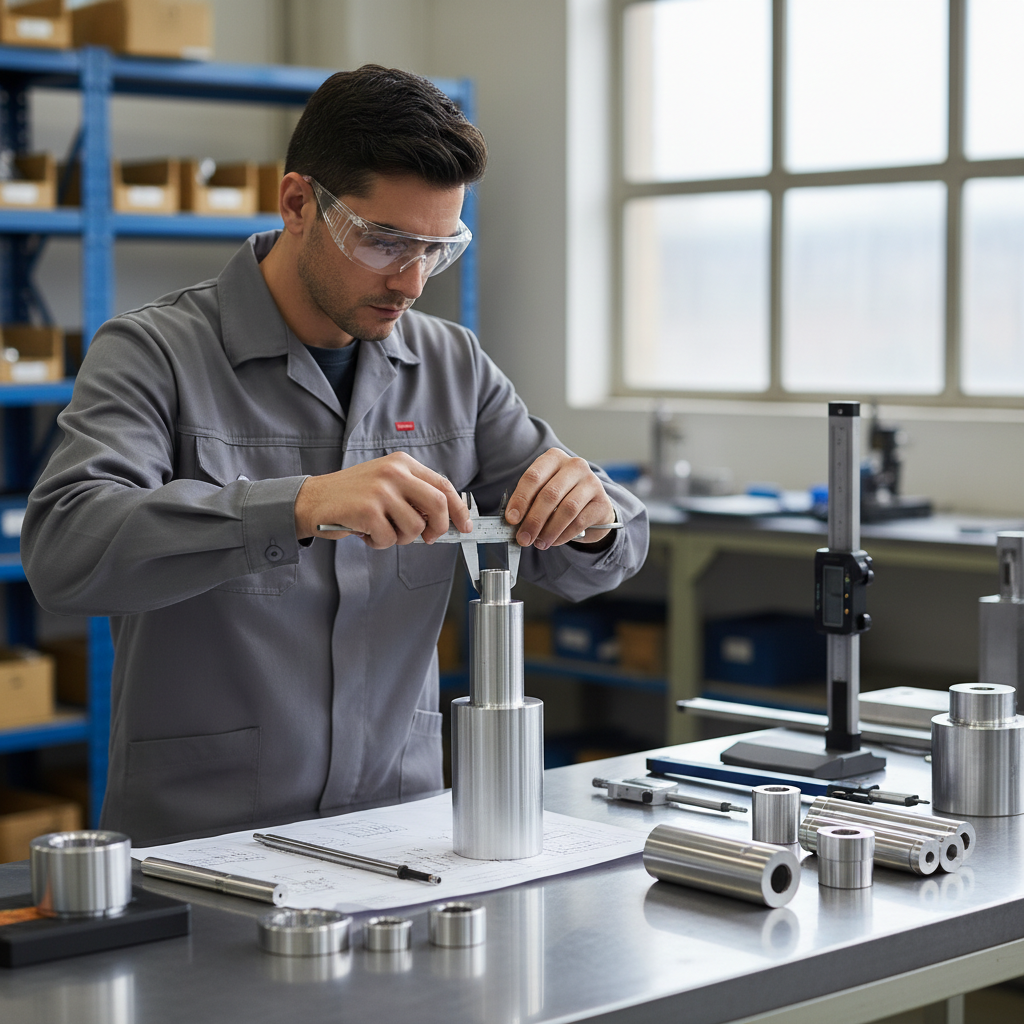
The shift toward US contract manufacturing reshoring is driven by more than just economics; it is a strategic move to safeguard technical superiority and proprietary designs. When production stays domestic, the physical distance between an engineer’s desk and the machine shop is significantly reduced. This proximity allows for face to face site visits and real time communication within the same time zones, eliminating the lag associated with international coordination.
For precision components, such as those produced through specialized contract manufacturing services, the margin for error is razor thin. Tight feedback loops are essential. If a design requires a mid production adjustment or a quality deviation is detected, a domestic shop can pivot in hours. In contrast, an overseas factory may continue producing sub-par parts for days before the issue is communicated across oceans and language barriers. Maintaining high standards for tolerances and finish quality requires a level of oversight that is only practical when the shop floor is accessible.
Furthermore, intellectual property (IP) protection remains a primary concern for OEMs. The US legal system provides a robust framework for enforcing patents and trade secrets that is often non-existent or difficult to navigate in foreign jurisdictions. By partnering with a domestic facility, companies ensure their sensitive data and innovative designs remain under the protection of federal law. Those who learn more about Duchesne Manufacturing recognize that keeping production in the US is the most effective way to prevent unauthorized design replication. This level of oversight ensures that every part meets the exact specifications of the original design while keeping the company's competitive advantages secure.
Speed to Market and Production Agility
The benefits of proximity extend directly into operational efficiency. By adopting US contract manufacturing reshoring, OEMs gain the ability to implement just in time manufacturing strategies that are simply not viable when separated by an ocean. When a shop floor is domestic, the feedback loop between a market shift and a production adjustment is measured in hours rather than weeks.
The primary driver of this agility is the drastic reduction in transit times. Traditional offshore sourcing relies on ocean freight, which frequently involves six week lead times and the constant threat of port congestion. In contrast, domestic logistics utilize trucking networks that deliver components across state lines in days. This shift allows for a more responsive production cycle:
Metric | Offshore Sourcing | Domestic Reshoring |
|---|---|---|
Typical Lead Time | 45 to 90 Days | 5 to 14 Days |
Inventory Holding | High (Safety Stock) | Low (Lean/JIT) |
Design Iteration | Slow and Costly | Rapid and Incremental |
By cutting the time parts spend in transit, companies can maintain significantly lower inventory levels. This optimization improves cash flow by reducing the amount of capital tied up in sitting stock. Utilizing agile contract manufacturing services means that design changes or order surges can be handled with minimal disruption. As companies learn more about Duchesne Manufacturing, it becomes evident that a Utah based production partner provides the geographic advantage necessary to outpace competitors relying on brittle, long distance supply chains.
Which Industries Are Benefiting Most from the Reshoring Trend?
This operational agility is most critical in sectors where technical precision and regulatory oversight are non-negotiable. Semiconductor manufacturing has seen a massive influx of domestic investment as OEMs seek to secure the supply of high-tech components and reduce reliance on vulnerable foreign hubs. Similarly, the medical device industry increasingly relies on contract manufacturing services that can guarantee strict adherence to FDA standards and rapid prototyping for life-saving technologies.
Aerospace and defense contractors are also leading the charge. These sectors require extreme material traceability and tight tolerances that are difficult to verify or audit from a distance. Furthermore, the construction and heavy equipment industries are reshoring the production of large-scale components to eliminate the exorbitant freight costs of shipping heavy machinery across oceans. In these high-stakes environments, any industry requiring rigorous quality audits or immediate design iterations is a natural fit for US contract manufacturing reshoring. By focusing on domestic partnerships, these sectors ensure that their finished products meet the highest American industrial standards while maintaining a lean, responsive production schedule.
The Duchesne Manufacturing Difference: Scalable Solutions in Utah

The practical success of US contract manufacturing reshoring depends on finding a domestic partner with the physical infrastructure to handle volume. Duchesne Manufacturing operates a dedicated facility in Duchesne, UT, designed to bridge the gap between prototyping and full scale production. We provide the equipment and skilled labor necessary to manufacture precision parts, complex components, and finished products ready for market.
As a family owned business, we offer a level of accountability and direct communication that international conglomerates cannot match. Our Duchesne, UT location serves as a strategic logistics hub, providing efficient access to the Western United States while avoiding the congestion and overhead of coastal metropolitan areas. This geographic advantage ensures that our contract manufacturing services remain responsive to fluctuating demand. By learning more about Duchesne Manufacturing, OEMs can discover a partner that combines a dedicated work ethic with the industrial capacity required to compete on a global scale. We understand the specific regulatory and quality demands of North American markets, ensuring every item built in our shop adheres to strict client specifications.
Reshoring offers original equipment manufacturers a powerful way to secure their supply chains and ensure consistent quality through domestic production. By choosing local partnerships, you reduce shipping delays and gain greater control over your manufacturing processes. If you want expert help evaluating how these advantages can benefit your specific operations, you are invited to view our full range of manufacturing services today. Our team is here to support your transition toward a more efficient and reliable production model.